



Imaging R&D Is Quietly Changing the Way It Operates
An increasing number of leading enterprises are shifting their imaging laboratories from manual, operator-driven workflows to system-oriented, centrally scheduled operations.
Testing is no longer executed primarily by human intervention. Instead, tasks are issued, scheduled, and executed by integrated systems.
In a recent episode of CCTV’s “Technology Decoder”, Xiaomi’s imaging laboratory clearly demonstrated this transition:
Engineers no longer repeatedly adjust lighting, replace test charts, or manually align devices. Test tasks run automatically, and results are centrally collected, analyzed, and reviewed.
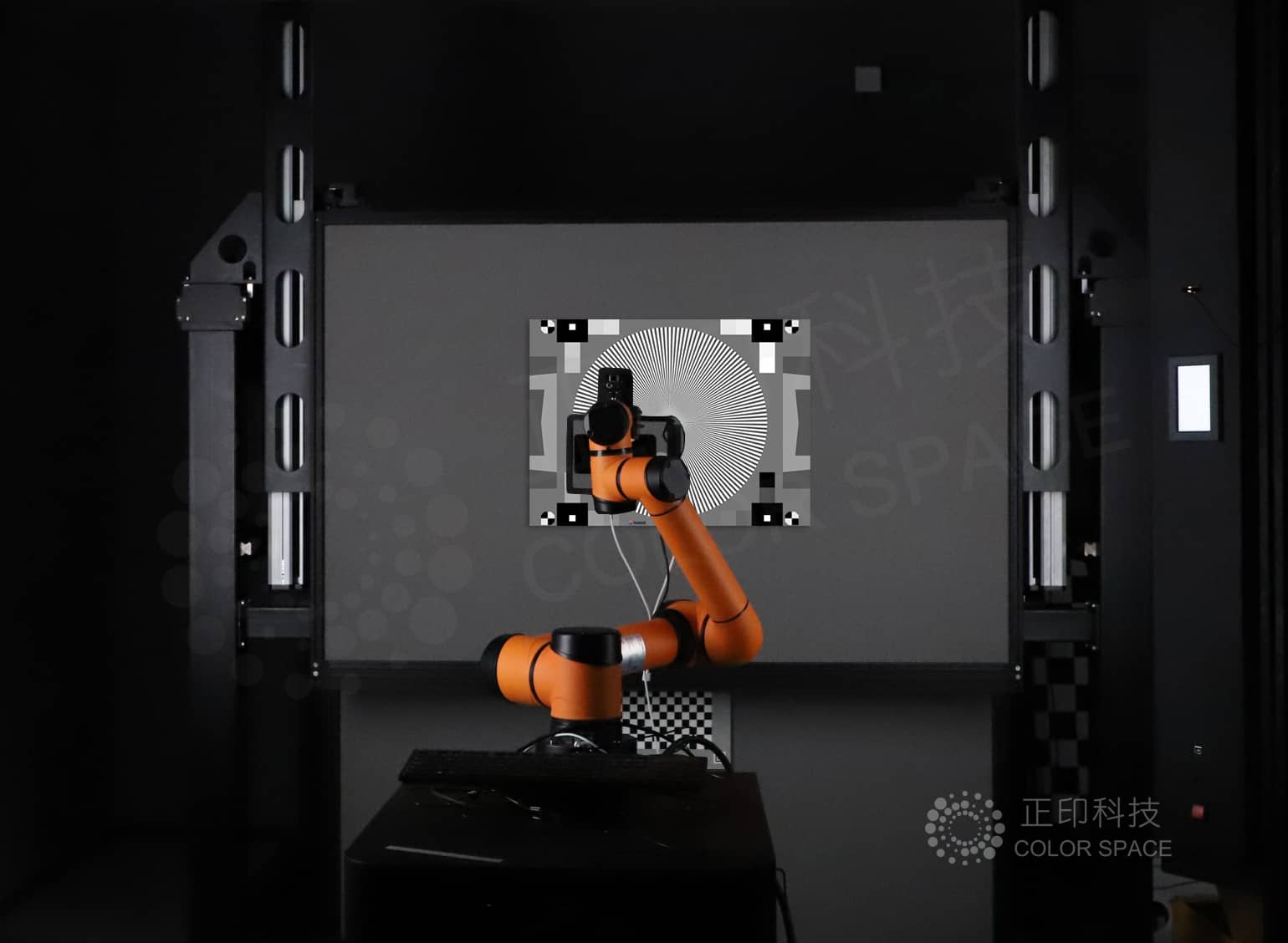
This automated imaging laboratory—designed, deployed, and continuously supported by ColorSpace—has been deeply integrated into daily R&D workflows and is now operating as a stable production-grade system.
It is not merely a laboratory upgrade case, but a concrete implementation of a broader shift:from “people running test procedures” to “systems executing test tasks.”

CCTV “Technology Decoder” | Learn More
01 | As Imaging Capabilities Advance, Testing Systems Are the First to Feel the Pressure
As imaging technologies evolve rapidly, the first bottleneck often emerges in testing.
In recent project engagements, customer requirements have become increasingly specific and frequent:
Multi-camera and multi-module configurations requiring parallel testing
Repeated validation of different algorithm versions on the same hardware
Concurrent evaluation of HDR, night imaging, stabilization, autofocus, and video scenarios
Testing evolving from a phase-based activity into a high-frequency, continuous process
These demands do not merely increase the number of test items—they impose systematic requirements on test stability, reproducibility, and execution efficiency.
Testing is no longer just a supporting function.
It is becoming a determining factor in overall R&D velocity.
As a result, more organizations are asking a fundamental question:
Can traditional imaging laboratories continue to support future R&D demands?
02 | Why Traditional Imaging Laboratories Struggle to Scale
In multiple laboratory upgrade projects, common challenges emerged as testing scale and frequency increased:
1. Excessive dependence on individual operators
Even with standardized procedures, variations in personnel, timing, and manual habits can introduce inconsistencies that affect result comparability
2. Mismatch between execution efficiency and test scale
As projects and algorithm versions multiply, simply adding manpower becomes ineffective, turning test scheduling into a bottleneck.
3. Difficulty transforming test data into long-term assets
Dispersed storage and limited traceability make comparison, trend analysis, and reuse costly.
At scale, manual workflows and fragmented tools reach their limits.This is where automated imaging laboratories become essential.
03 | Automated Imaging Laboratories: A Systemic Transformation
In practice, we have reached a clear conclusion:
The core of an automated imaging laboratory is not the number of devices, but the robustness and scalability of its system architecture.
An effective system must be able to:
· Centrally schedule test tasks
· Standardize and lock test conditions
· Continuously accumulate structured test data
True automation does not solve efficiency alone—it addresses three foundational challenges:
· Long-term consistency of test conditions
· Stable and reliable task execution
· Unified, traceable, and comparable data management
This marks the fundamental distinction between traditional and automated laboratories:
tests are executed by systems, not by individuals.
04 | Why Different Industries Converge on Similar Laboratory Models
Across consumer electronics, automotive imaging, and other imaging-driven industries, leading enterprises are converging on similar laboratory architectures.
This is driven by three irreversible constraints:
· Increasing imaging system complexity
· Testing moving earlier and spanning the entire R&D lifecycle
· Rising requirements for reproducibility and consistency at a system level
Under these conditions, automated imaging laboratories evolve from efficiency tools into core R&D infrastructure.
05 | ColorSpace’s Practical Methodology from Leading Laboratory Projects
Through long-term involvement in imaging laboratory construction and upgrades, ColorSpace has developed a proven, deployable methodology.
We have delivered solutions for leading organizations including AMD, Qualcomm, Huawei, OPPO, HONOR, Transsion, ZTE, FAW-Volkswagen, Arrow Electronics, Great Wall Motor, ByteDance, SenseTime, and others.
Our approach is guided by three principles:
· Imaging test methodology first, not generic automation templates
· Integrated system design covering equipment, automation, and workflow
· Progressive upgrades to minimize operational risk
As laboratories move toward high-frequency, parallel execution, methodology must be embodied in system capabilities.
The ColorSpace platform organizes testing around test plans and test tasks, enabling:
· Automatic task decomposition and prioritization
· Resource allocation and parallel execution
· Coordinated multi-device scheduling
Managers gain real-time visibility through operational dashboards and remote monitoring, enabling objective evaluation of utilization, efficiency, and capacity planning.
The system also supports:
· Permission management
· Operation logging
· Data backup
· Open interfaces for third-party equipment and algorithms
OPPO Automated Imaging Laboratory
Huawei Automated Imaging Laboratory
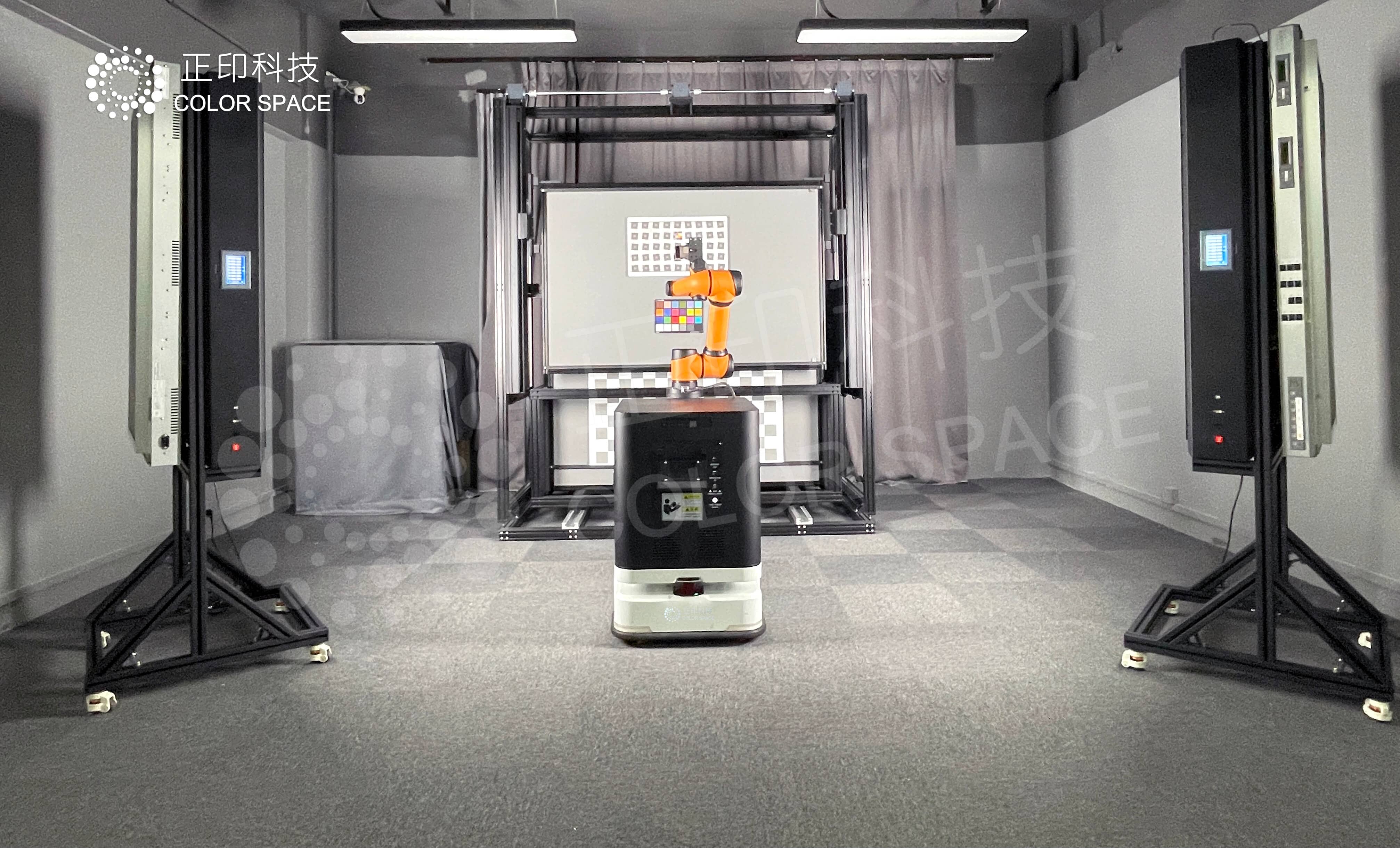
Image Quality Test Turnkey Solution(Click to Learn More)
06 | Automated Imaging Laboratories as the Foundation of Imaging Capability
What CCTV showcased was not just one company’s laboratory, but a broader industry consensus:
Imaging competitiveness is shifting from isolated technologies to systemic capabilities.
Automated imaging laboratories are becoming the foundational infrastructure that supports long-term imaging R&D.
ColorSpace will continue to advance imaging testing through automation, standardization, and systemization—working alongside partners to drive the next stage of imaging innovation.
For more information on related products and testing services, please contact:
E-mail: sales@colorspace.com.cn
Tel: 400-886-3881

Follow [ColorSpace] for industry news/events/solutions
Contact: sales@colorspace.com.cn
Phone: 15817270587
Tel: 400-886-3881(周一至周五 9:00~18:00)
Email: sales@colorspace.com.cn
Add: South Building #2-1101, Lv Di Qi Hang Office Building, Hou Sha Yu, Shun Yi District, Beijing, China